In today's fast-paced business world, companies are eagerly seeking ways to enhance resource management through robust ERP systems. As we delve deeper into sustainability, technology offers revolutionary insights into optimizing resource utilization.
Recent industry trends indicate that organizations are increasingly integrating sustainability metrics as part of their ERP solutions. Leading firms are adopting innovative tools to reduce waste, enhance energy efficiency, and streamline supply chain operations.
A reported surge in cloud-based ERP systems has been pivotal in offering flexible and scalable solutions that adapt to evolving resource management needs. The cloud enables enterprises to monitor, analyze, and manage resources in real-time, leading to data-driven decision-making and operational excellence.
From my experience at KPMG, one notable example was how a major manufacturing client utilized an ERP system to track their carbon footprint across different production sites. By implementing data analytics and real-time monitoring, they not only improved environmental metrics but also achieved significant cost reductions.
Furthermore, the advent of AI in ERP systems is driving unprecedented changes. Leveraging AI algorithms, companies can forecast demand, optimize inventory levels, and develop eco-friendly supply chain models.
The current trajectory showcases that organizations investing in technological enhancements are reaping long-term sustainability benefits along with operational efficiencies. As these trends continue, businesses must focus on integrating top-tier technology solutions to remain competitive and environmentally responsible.
Double Take on Sustainability: How Technology is Revolutionizing Resource Management in ERP Systems Featured
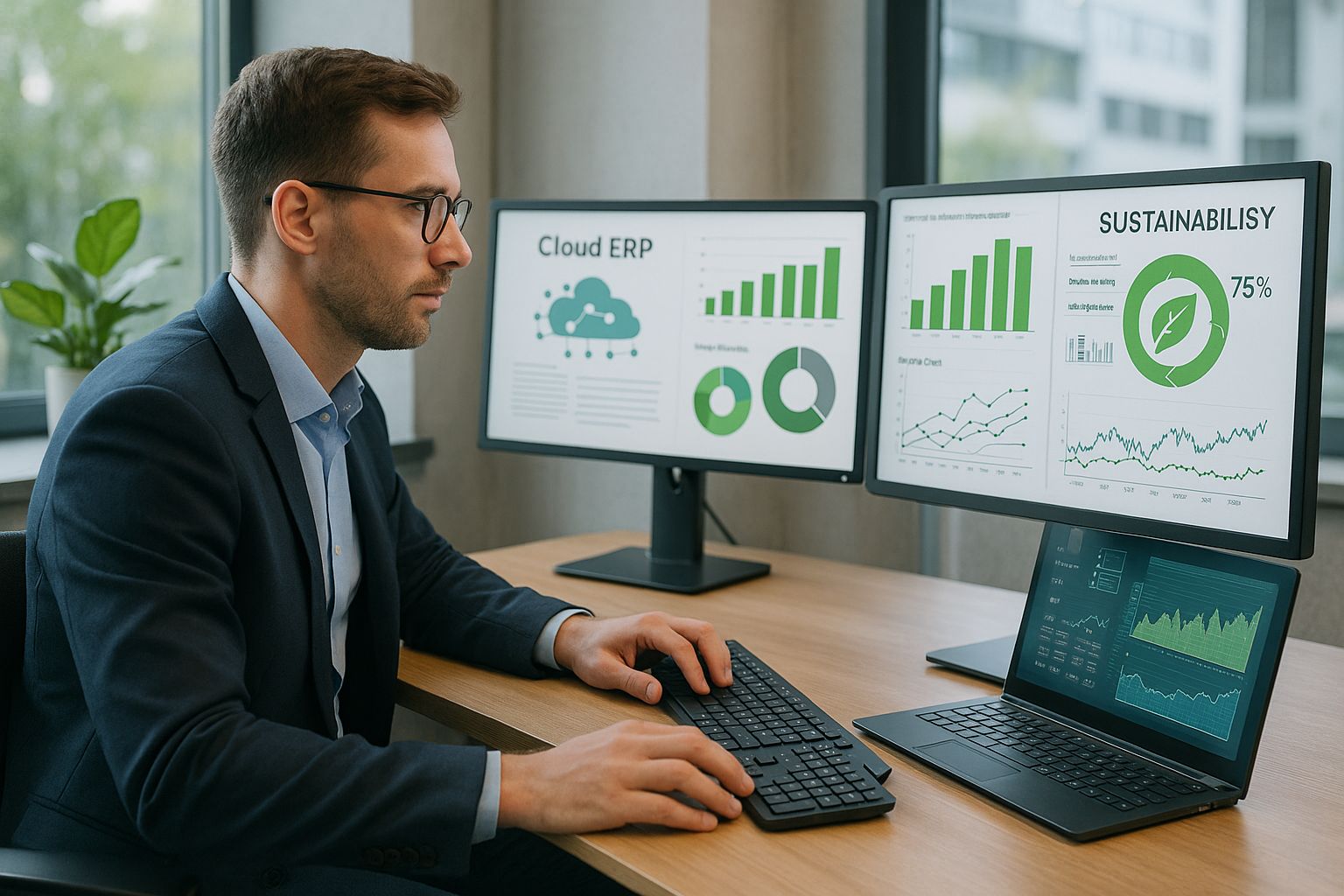 Discover how technology is transforming resource management in ERP systems, driving sustainability and efficiency through innovation.

Latest from ERP Global Insights
- Adapting ERP Systems: The Rising Trend of Enhanced User Experience
- Leveraging ERP in Healthcare: The Path to Operational Excellence
- Navigating Supply Chain Challenges with ERP Solutions
- Navigating ERP Implementation Challenges in Today's Business Landscape
- The Rise of Cloud ERP Solutions in Today's Business Environment