Financial reporting within businesses that employ ERP (Enterprise Resource Planning) solutions is undergoing substantial transformation amid a landscape of rapidly evolving technology.
Recent trends indicate that firms need to be vigilant and adaptive to maintain accuracy and compliance across their financial statements.
An increasing number of companies are leveraging dynamic ERP systems to streamline their accounting processes and enhance financial visibility.
Yet, this environment also presents emerging challenges that demand strategic foresight and implementation of innovative solutions.
One significant concern as observed within current industry trends is the integration challenges that come with cloud-based ERP systems.
With more organizations migrating to the cloud, ensuring seamless data integration between new ERP solutions and legacy systems is pivotal.
Companies like Deloitte have seen clients struggle with data silos when moving to new ERP platforms without a comprehensive integration strategy.
Furthermore, real-time reporting capabilities offered by modern ERP systems are reshaping how accounting teams handle data analysis.
While having access to real-time data provides a competitive edge, it also requires accountants to continually update their skills to interpret data accurately and promptly.
PWC has noted increased demand for specialized training programs to cultivate data-savvy finance professionals adept at leveraging these ERP functionalities.
Another critical trend is the heightened focus on cybersecurity within ERP frameworks.
As ERP systems hold sensitive financial data, robust security measures are non-negotiable.
KPMG has highlighted several instances where insufficient security measures led to breaches, emphasizing the need for proactive risk management approaches.
Implementing role-based access controls and regular security audits are essential practices for safeguarding financial integrity.
In conclusion, navigating the complexities of financial reporting in today's dynamic ERP environment requires businesses to remain agile and forward-thinking.
By addressing integration challenges, enhancing data skills, and reinforcing security protocols, organizations can harness the full potential of their ERP solutions to achieve clearer, compliant, and insightful financial reporting.
Navigating Financial Reporting Challenges in the Era of Dynamic ERP Solutions Featured
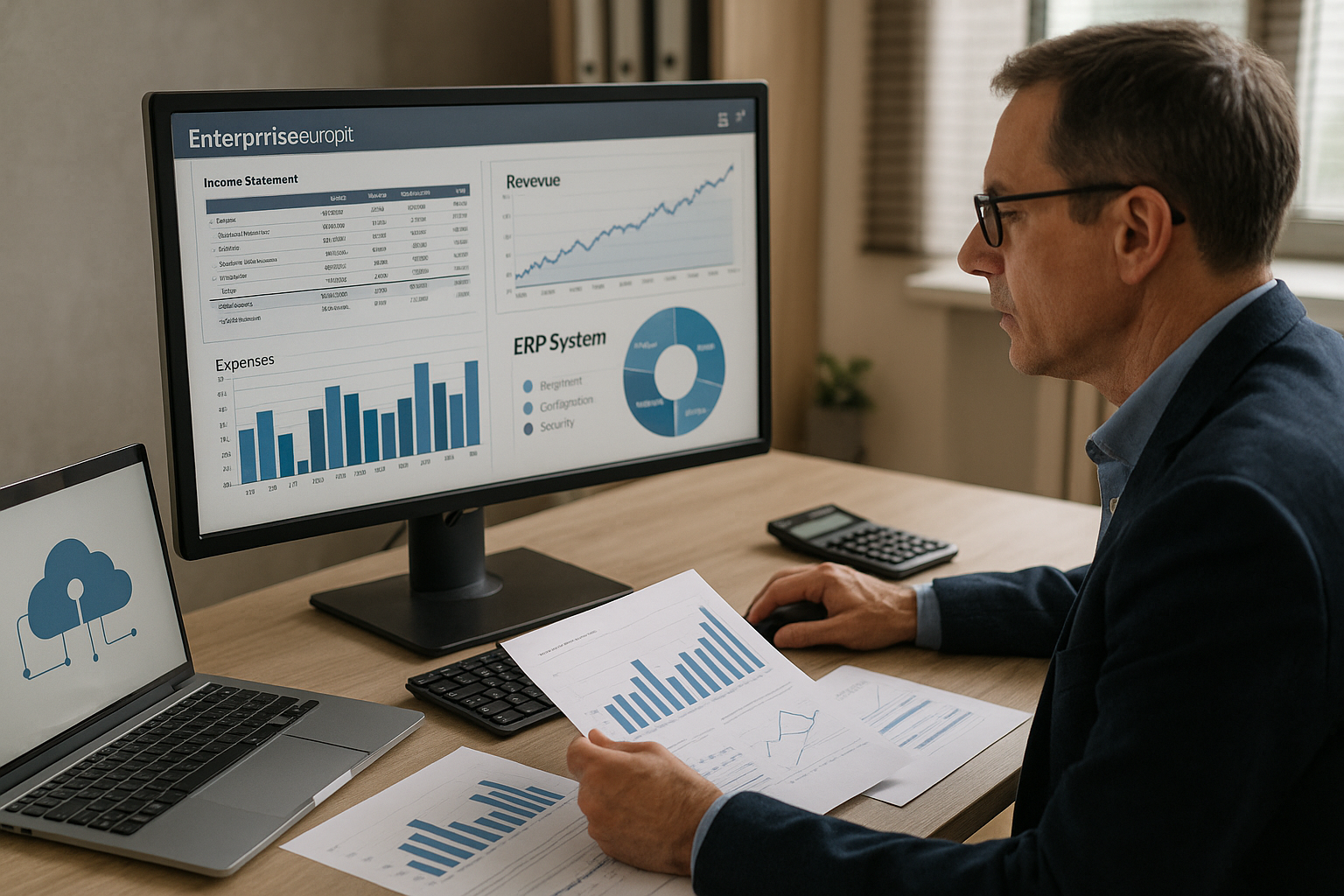 Explore how dynamic ERP solutions are transforming financial reporting and the strategic approaches needed to overcome integration, data, and security challenges.

Latest from ERP Global Insights
- Adapting ERP Systems: The Rising Trend of Enhanced User Experience
- Leveraging ERP in Healthcare: The Path to Operational Excellence
- Navigating Supply Chain Challenges with ERP Solutions
- Navigating ERP Implementation Challenges in Today's Business Landscape
- The Rise of Cloud ERP Solutions in Today's Business Environment